Physical Address
304 North Cardinal St.
Dorchester Center, MA 02124
Physical Address
304 North Cardinal St.
Dorchester Center, MA 02124

TL;DR – Home Lift Manila 2025
If you are considering installing a home lift in Metro Manila, here’s what you need to know:
Metro Manila’s vertical landscape isn’t just for condominiums anymore. Inside the city’s private residences, from sprawling Quezon City bungalows to modern townhouses in BGC and Makati, a quiet revolution is taking place: the rise of the home lift.
Installing a home lift in Manila is no longer a distant luxury but a practical, life-enhancing investment. Whether you’re future-proofing your home for aging parents, seeking ultimate convenience, or adding significant value to your property, a residential elevator is the definitive solution.
But where do you start? What is the real home elevator price in the Philippines for 2025? Which brands can you trust, and what does the installation process actually involve? This comprehensive guide provides the clear, current, and expert answers you need.
Let’s address the most pressing question first. The cost of installing a home elevator in the Philippines in 2025 is a significant investment, with a typical price range of ₱1,200,000 to over ₱3,000,000.
This is a wide range because the final price depends on several key factors:
Civil Works: The price may or may not include the necessary construction for the elevator shaft. Retrofitting into an existing home can sometimes be more complex than incorporating a lift into a new construction plan.
| Brand | Typical Price Range (₱) | Floors Supported | Installation Time | Key Value Point |
| Cibes Lift | 2.5M – 4M+ | 2–6 floors | 3–5 months | Premium design, direct service |
| OTIS | 2.5M – 5M+ | 2–8 floors | 4–6 months | Strongest service network |
| Mitsubishi | 3M – 6M+ | 2–8 floors | 4–6 months | Japanese engineering quality |
| Kalea | 1.8M – 2.5M | 2–5 floors | 3–4 months | Affordable Swedish option |
Pro Tip: Always request an all-inclusive quote that details the cost of the unit, shipping from the country of origin, local delivery, installation, and all required construction.
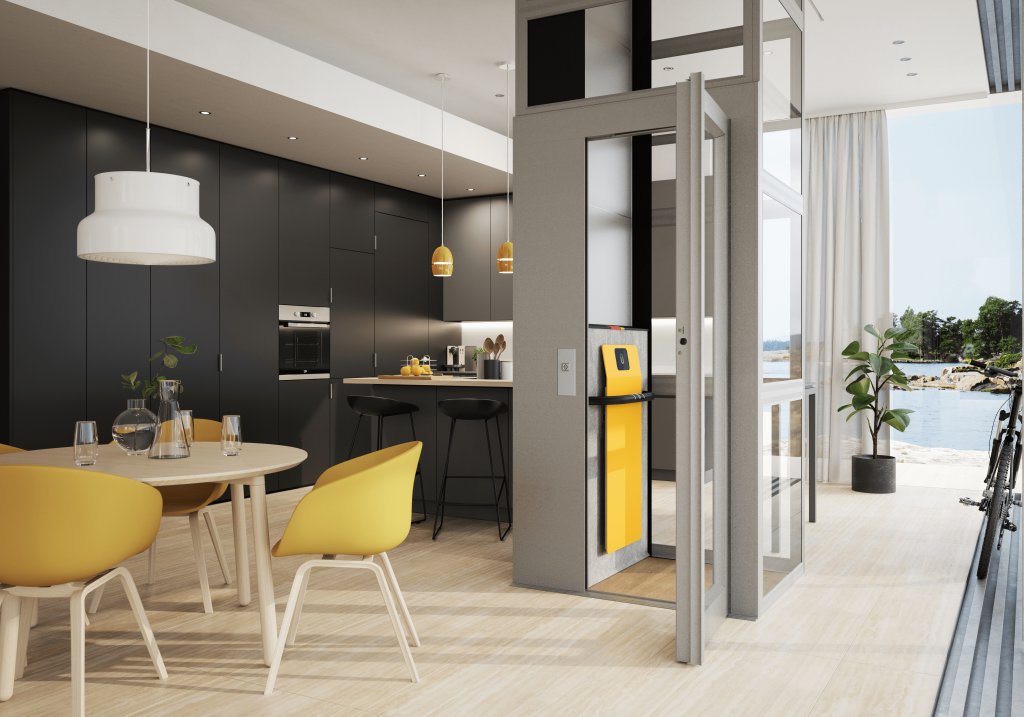
Caption: A modern home lift seamlessly blends functionality with elegant interior design.
Choosing a reputable brand is crucial for safety, reliability, and after-sales support. Here are some of the leading names you will encounter when looking for a home lift in Manila:
| Brand | Country of Origin | Drive System | Best For | Local Presence in Manila |
| Cibes Lift | Sweden | Screw-driven | Retrofitting existing homes | Direct Philippine office |
| OTIS | USA | Belted traction | Reliability, brand legacy | Concepcion-OTIS network |
| Mitsubishi | Japan | Traction | Long-term durability, smooth ride | Authorized distributors |
| Kalea | Sweden | Screw-driven | Budget-friendly European option | Growing distributor base |
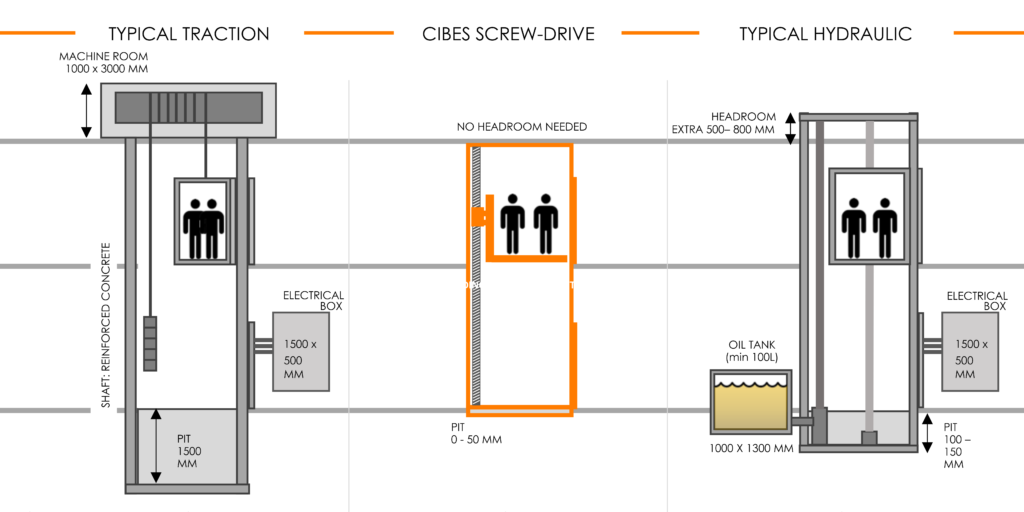
Understanding the journey from inquiry to operation demystifies the process. Here’s what you can typically expect:
Each city in Metro Manila (Makati, Quezon City, Taguig, etc.) has its own requirements for building permits. A reputable supplier will have experience in this area and can assist you or your architect with the necessary documentation.
The Philippines’ tropical climate means choosing materials resistant to humidity is wise. More importantly, ensure the elevator has a reliable Automatic Rescue Device (ARD) or battery backup system to safely lower the lift to the nearest floor during one of Manila’s frequent power interruptions.
Your relationship with the supplier doesn’t end after installation. Confirm they have a local, readily available technical team for preventive maintenance and emergency support. This is a non-negotiable factor.
Yes, absolutely. Brands specializing in screw-driven, machine-room-less (MRL) technology, like Cibes, are specifically designed for retrofitting into existing homes with minimal structural changes.
Platform lifts are generally the most compact, with some models requiring a footprint of only about 1.5 x 1.5 meters. Pneumatic vacuum elevators are also extremely space-efficient.
From signing the contract to the final handover, the process typically takes 4 to 6 months. This includes 12-16 weeks for fabrication and shipping, followed by 2-4 weeks for local construction and installation.
Reputable home elevators sold in the Philippines must comply with strict international safety standards (like the European EN 81-41). They are equipped with numerous safety features, including emergency brakes, door sensors, an alarm button, and battery backup systems.
Yes. Each LGU (Makati, Quezon City, Taguig, etc.) has different rules; reputable suppliers assist with this process.
Highlight the importance of ARD (Automatic Rescue Device) and battery backup systems.
Stainless steel and glass finishes are recommended; avoid materials prone to rust.
Some brands or distributors offer financing options; worth highlighting for local homeowners.
For more details on installation steps, see our Philippines Home Lift.
Installing a home lift is a transformative decision. It’s an investment in accessibility, daily convenience, and the long-term market value of your property. By understanding the real costs, choosing a trusted brand, and preparing for the installation process, you can confidently add a feature to your home that will serve your family for decades to come.